


Getting your equipment ready for the mountain
A workshop visit before the trip makes equipment care part of your plan.
All practical guides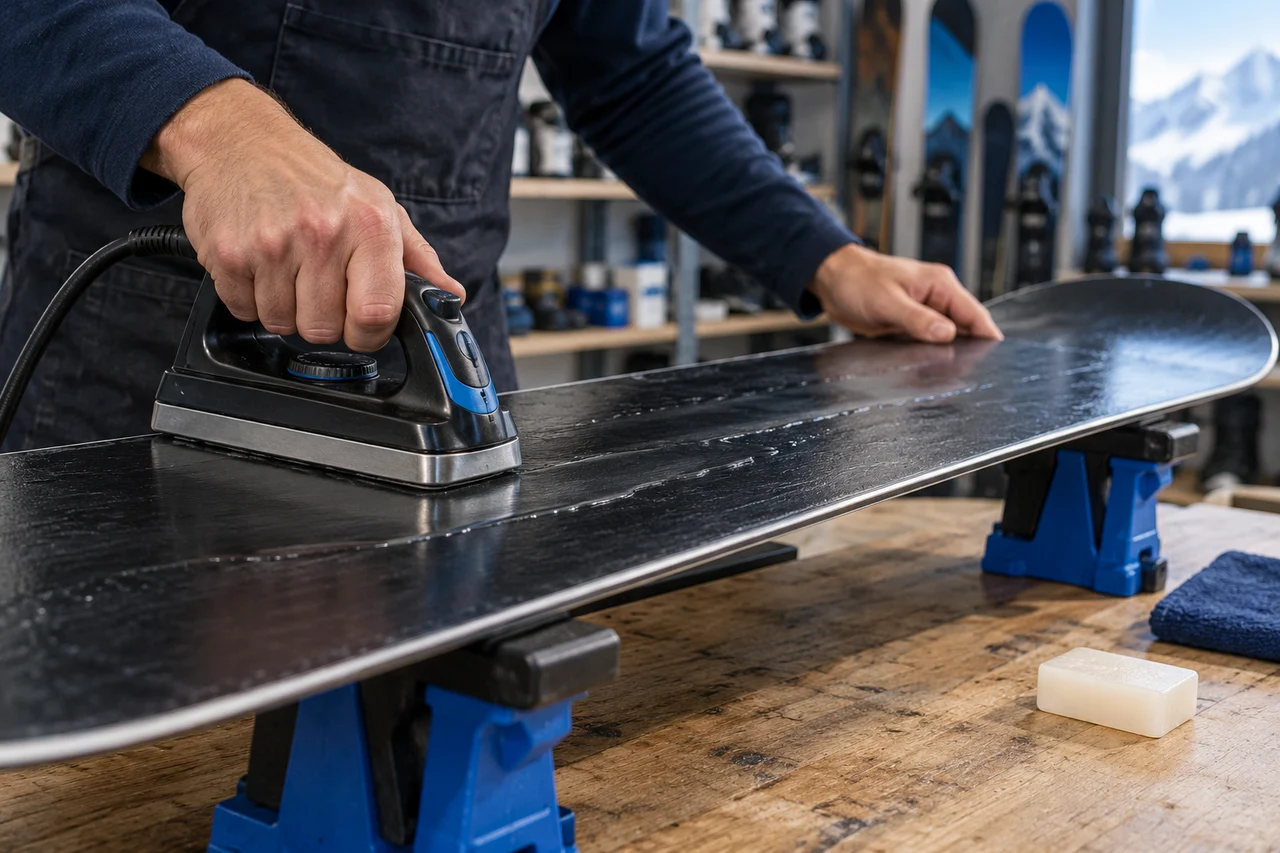
Start with an inspection in good light
Take out your own skis or snowboard ahead of the trip. Look at the bases and edges, bindings, straps and boot soles. Note deep damage, separation, cracks, loose parts or heavy corrosion. If you cannot judge the significance, show the workshop before riding.
For rental equipment, do a short handover check with the staff. Ask how to operate the fastening system and what to do if something goes wrong. Pointing out existing damage immediately avoids uncertainty about its origin at return.
- Inspect
Notice damage
- Discuss
Agree the work with a technician
- Check
Collect and check the equipment
Describe the job to the workshop
Getting ready for a trip is a useful starting point, but also describe when the equipment was last used, where it was stored and any impacts or repairs. A technician can assess which work is needed. Wax does not fix deep damage, and edge work does not establish that a binding is sound.
Base condition, snow and use affect care needs. A universal service-every-N-days rule is not very useful without an inspection. Agree the work, estimated cost and completion date; discuss any additional repair separately.
| Work | What to discuss |
|---|---|
| Base care | Base condition, preparation and suitable treatment |
| Edges | Damage, corrosion and whether edge work is needed |
| Repairs | Nature of the defect, repair feasibility and timing |
| Bindings and boots | Compatibility, condition and a separate setup check |
More from the primary source: Swix · preparing skis and snowboards for winter
After riding: remove moisture and let things dry
Before transport, remove loose snow without striking equipment against a hard surface. Do not leave a wet setup sealed inside a bag after the trip. Wipe accessible surfaces and let items dry in a ventilated place, following the manufacturer's instructions.
For boots, lenses and soft components, avoid improvised heat sources: a radiator, exposed heater or hairdryer is not automatically an approved drying method. With rental items, ask the staff about return procedures rather than dismantling them to speed up drying.
When to stop and ask for help
If an impact changes the way the setup behaves, causes a crack, loosens fastening or breaks a component, do not keep riding just to finish the day. Contact the rental point and explain what happened and where you are. Do not disguise damage with glue, ties or improvised adjustments.
If convenient and safe, take an overview and a close-up for the workshop. Pictures help prepare the conversation, but a decision about further use requires inspection of the item itself.
Before the next season
After the final day, discuss storage preparation with the workshop. Keep dry equipment away from sustained moisture and direct heat, and keep a record of the work. Before the next outing, check condition and compatibility again, especially after changing boots or bindings.
Keep this for your trip
Tick what is ready or copy the list to your notes. Ticks last while this page is open.
Sources behind this guide
Editorial guidance for preparing a rental trip. Technical points draw on primary sources; check resort rules and the instructions for your actual equipment before use.
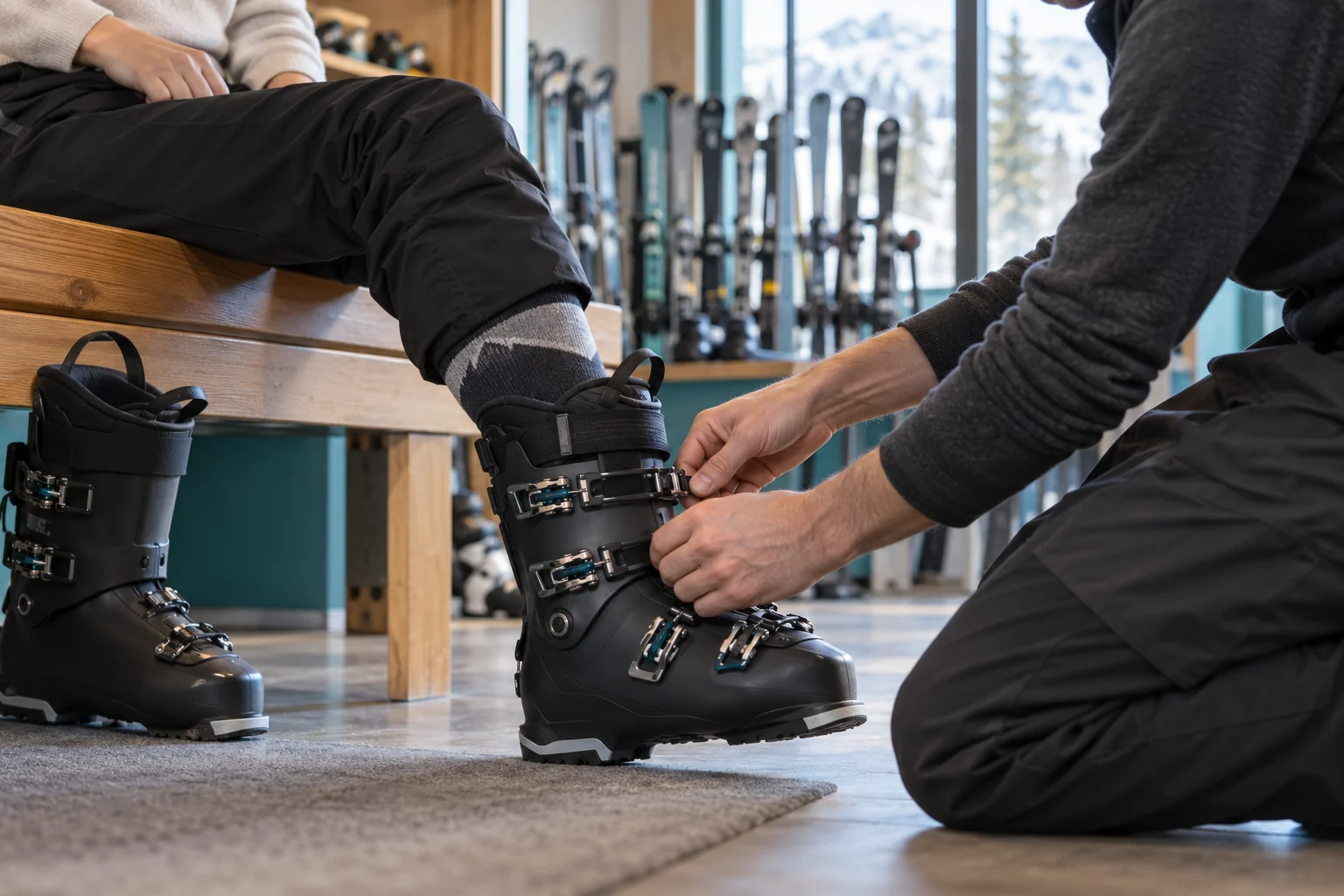
The measurements behind a good fit
Height, weight, shoe size and ability are the starting point for a comfortable setup.
Read guide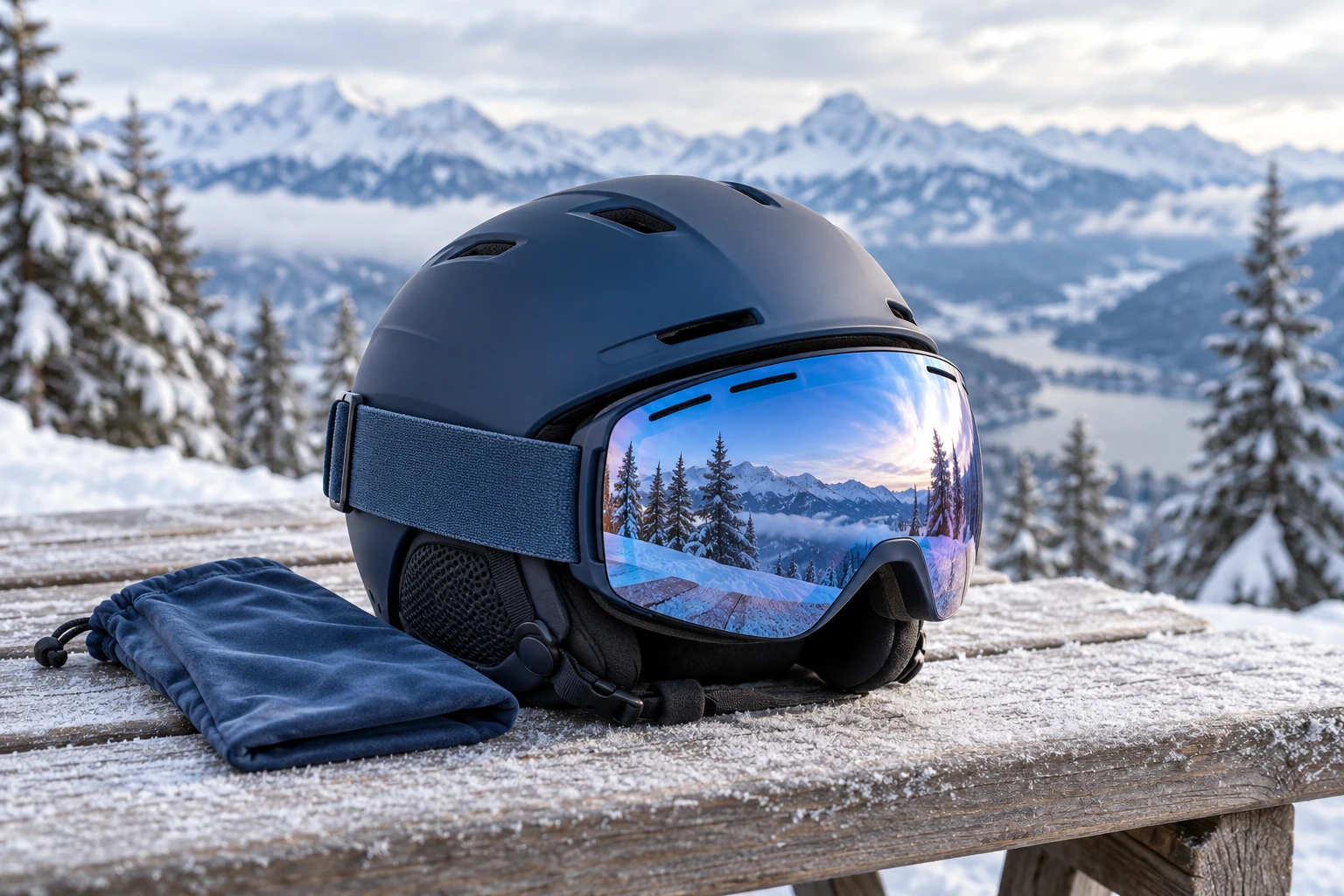
Snow goggles: light, fit and a clear view
Understand light transmission, fit goggles with your helmet and care for the lens.
Read guide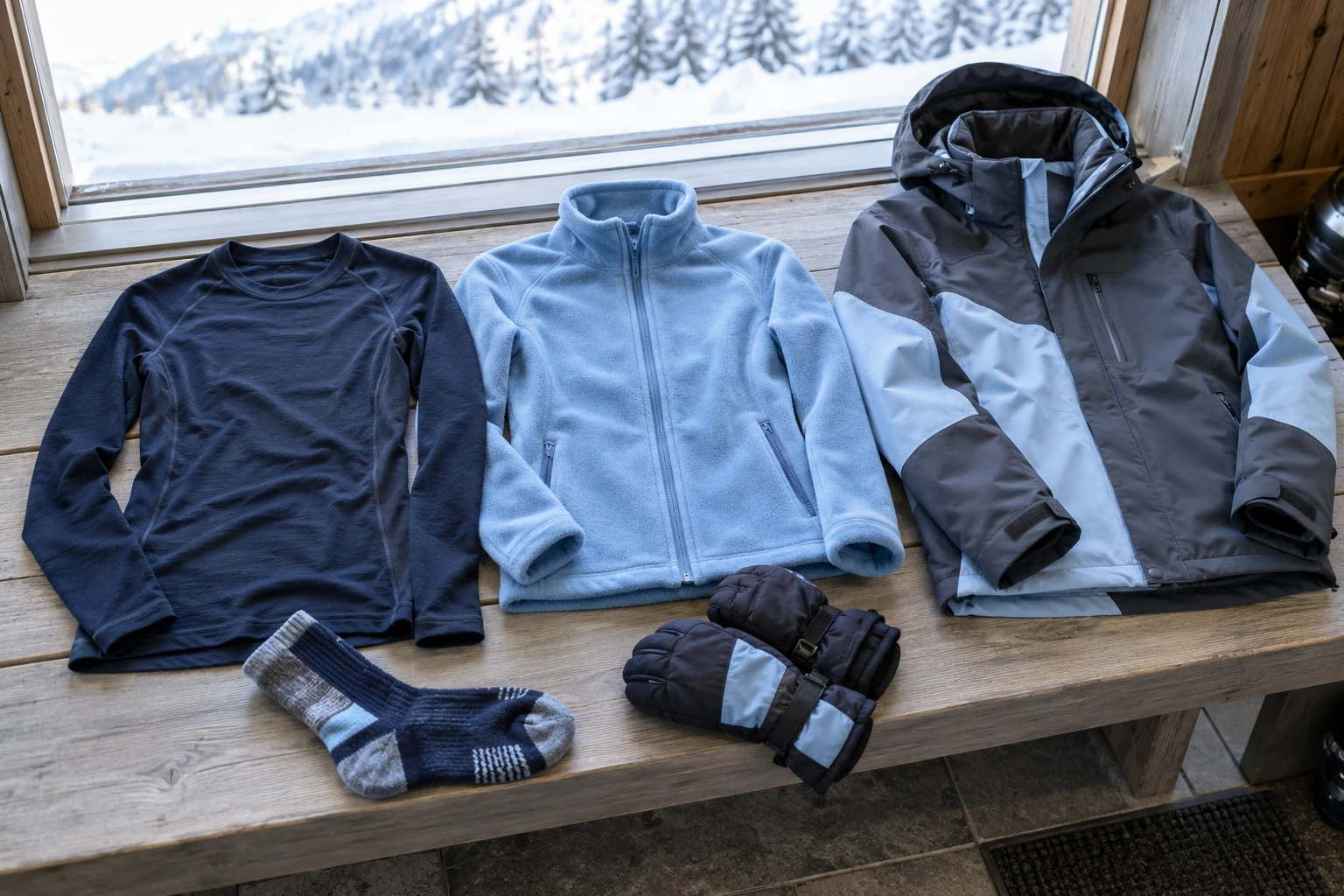
What to wear skiing: three layers, less bulk
A base layer, insulation and weather protection. Dress for activity, wind and breaks.
Read guide