


Snow goggles: light, fit and a clear view
Understand light transmission, fit goggles with your helmet and care for the lens.
All practical guides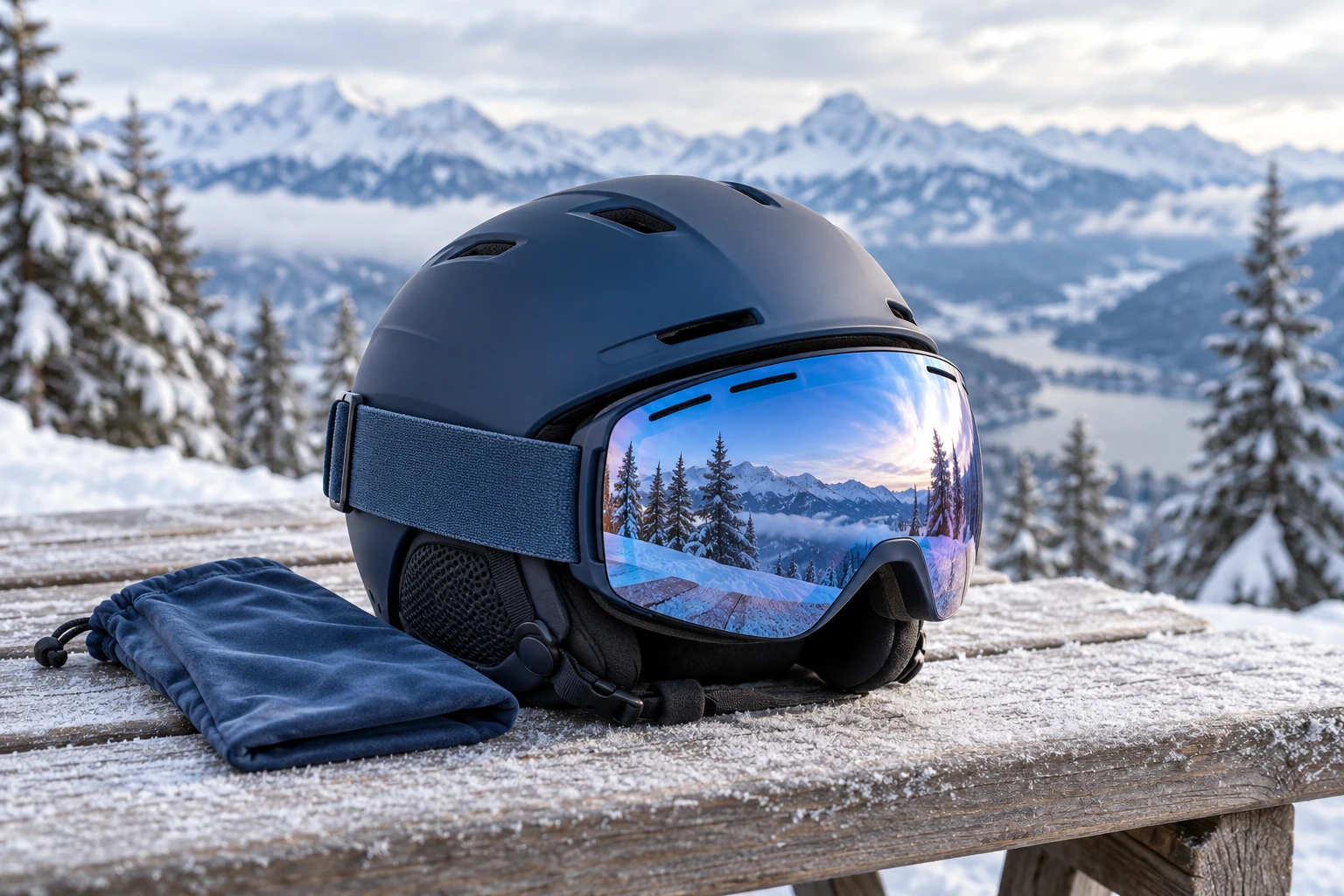
Try goggles with your helmet
Goggles should sit securely without pressing on the bridge of the nose or noticeably restricting your view. Wear the helmet and check how the edges, strap and ventilation work together. Strap tension should not compensate for an unsuitable frame shape.
Children need an appropriate junior fit. If you wear prescription glasses, mention this before choosing. OTG models are designed for wearing over glasses, but your particular frame still needs a combined fitting; the label does not guarantee that every pair fits without pressure.
More from the primary source: Smith · choosing snow goggles, lenses and fit
What VLT means
VLT is the proportion of visible light passing through a lens. All else being equal, a higher value lets more light through and can suit dim conditions; a lower value lets less through and is intended for brighter conditions. Compare the stated value and use of the actual lens rather than its reflected colour in a photograph.
Light transmission and ultraviolet protection are separate properties. A photochromic lens changes within the manufacturer's stated range; an interchangeable lens needs a compatible system. These features should be listed for the variant, not assumed from the word premium.
Lower VLTLess light through the lens
Higher VLTMore light through the lens
This diagram explains the principle. Check the actual lens range and intended use.
More from the primary source: Smith · choosing snow goggles, lenses and fit
Match the lens to the day's plan
Morning sunshine, clouds and evening lighting create different needs. Check the forecast and when you expect to finish. Ask the staff which conditions the available variant suits and whether a change can be arranged if conditions change.
No goggle restores clear visibility in every fog, snowfall or terrain condition. If people and run boundaries are hard to see, slow down and follow resort rules. Changing a lens does not automatically make difficult conditions suitable for riding.
| Property | Practical question |
|---|---|
| Size and fit | Does it fit the face and selected helmet? |
| VLT and intended use | Which light conditions is it intended for? |
| OTG | Can I try it with my own glasses? |
| Lens replacement | Does this model support it, and which lenses are compatible? |
If the lens mists up
Check that clothing is not blocking ventilation and that exhaled air is not being directed inside the frame. Gently remove external snow without pushing it inside. If the inside is wet, stop somewhere suitable and let the goggles dry as instructed.
Do not rub a wet inner lens without checking: anti-fog coatings need suitable care. Do not substitute household chemicals, a hot radiator or paper tissue for the approved method. Ask the staff how to care for rental goggles.
Mention your glasses and helmet beforehand
In your booking, select the age group and variant; mention prescription glasses and a personal helmet in the comment if relevant. Bring the items you will use with the goggles so the team can check the combination rather than judge fit from a photograph.
Keep this for your trip
Tick what is ready or copy the list to your notes. Ticks last while this page is open.
Sources behind this guide
Editorial guidance for preparing a rental trip. Technical points draw on primary sources; check resort rules and the instructions for your actual equipment before use.
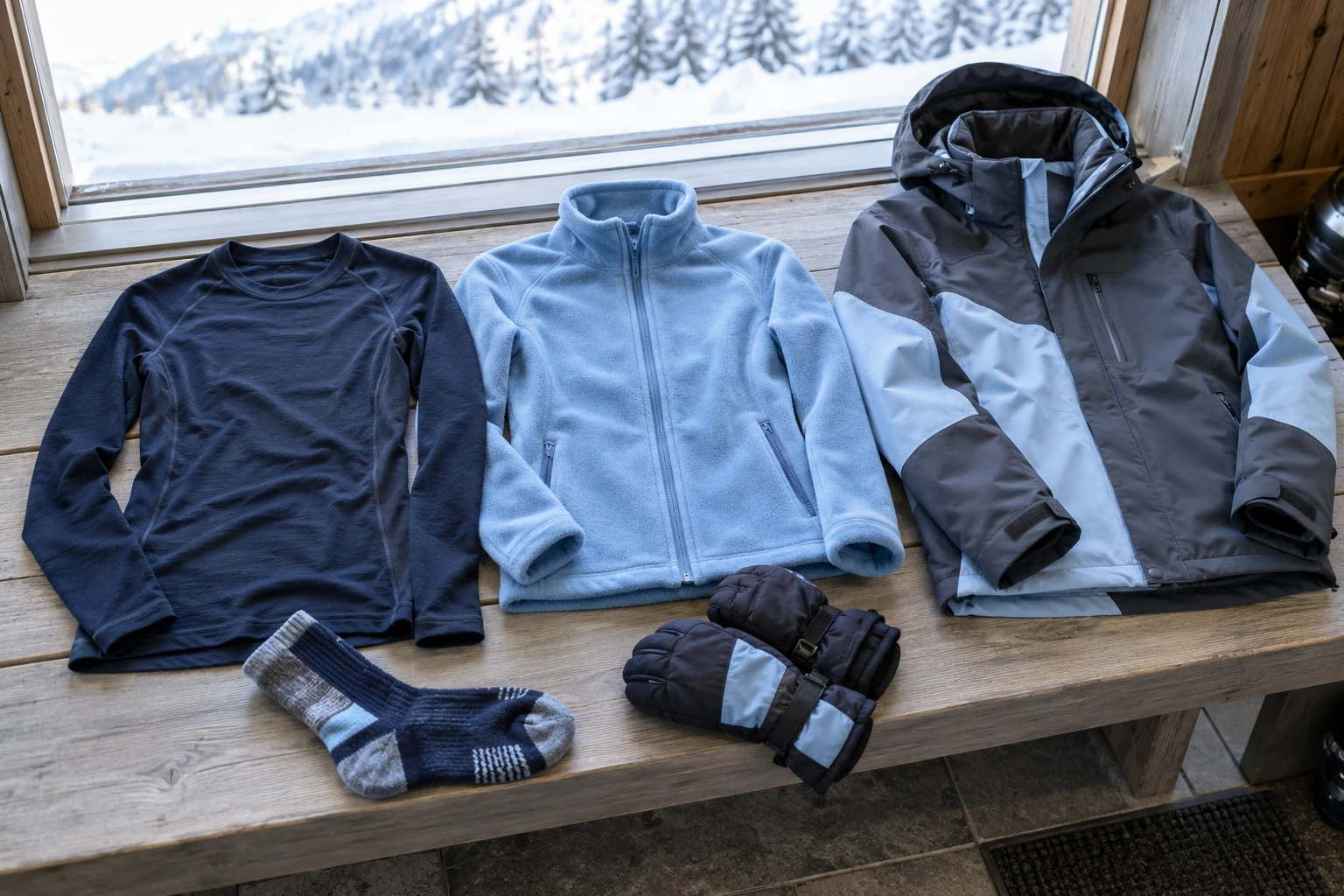
What to wear skiing: three layers, less bulk
A base layer, insulation and weather protection. Dress for activity, wind and breaks.
Read guide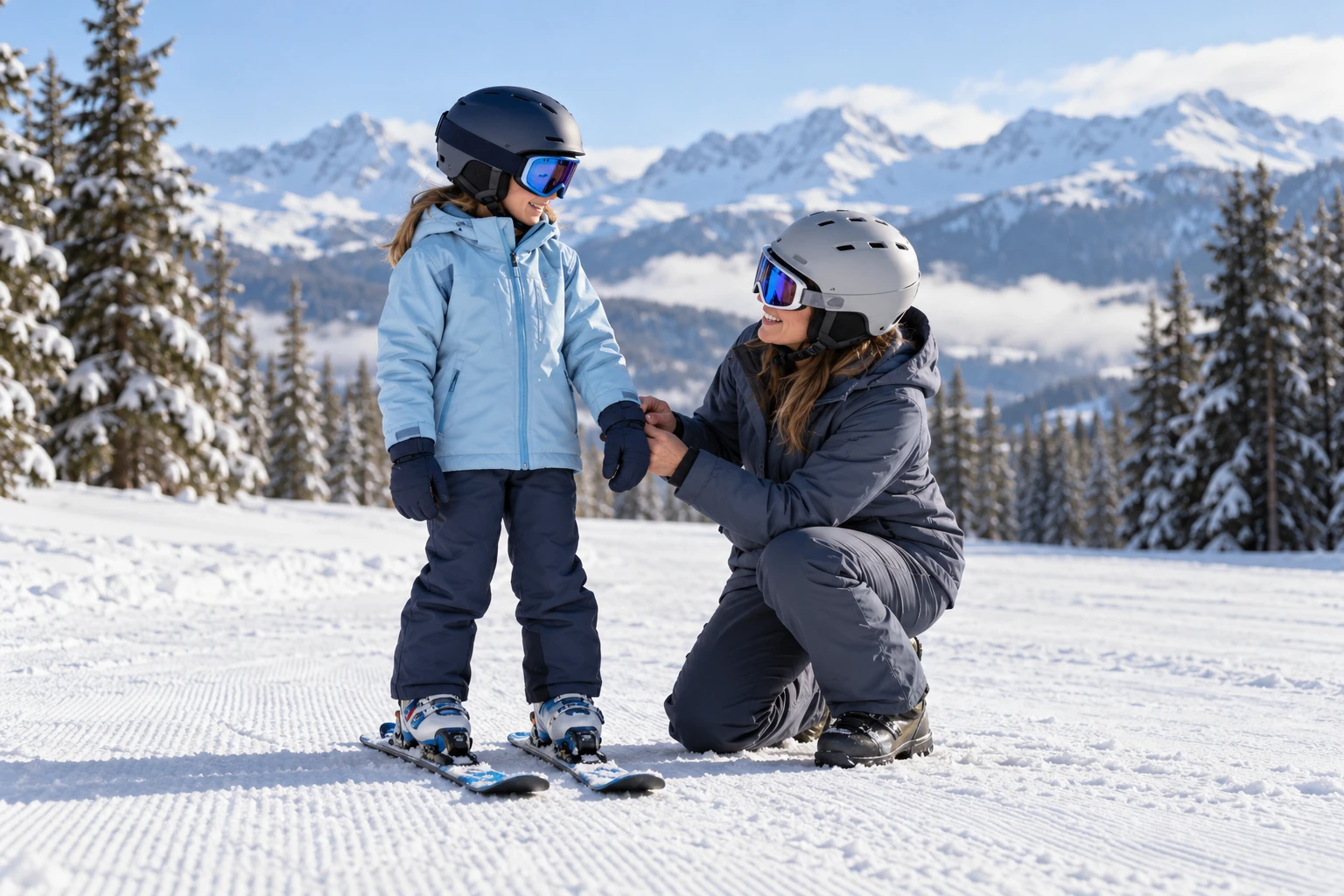
A child's first ski day, without the rush
Plan the lesson, fit a child's setup and leave room to enjoy the mountain.
Read guide
Getting your equipment ready for the mountain
A workshop visit before the trip makes equipment care part of your plan.
Read guide