

Skis or snowboard: where to start
Choosing your first sport and planning your first lesson in Sheregesh.
All practical guides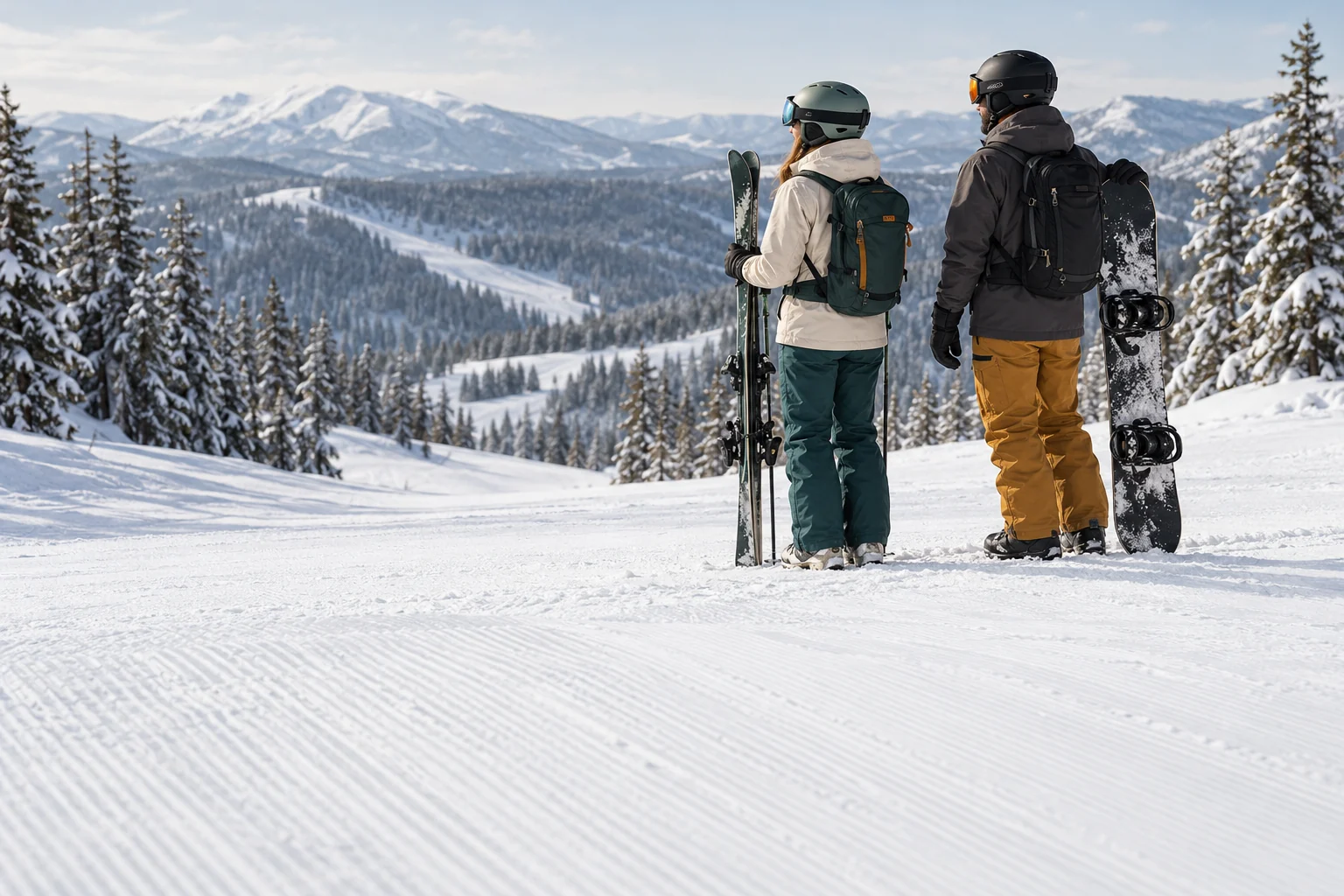
Start with curiosity, not a stereotype
Asking which sport is easier rarely settles the choice. On skis your legs move separately; on a snowboard both feet are attached to one board. Both introduce unfamiliar movements, and progress depends on the person, conditions and lesson. Wanting to try a particular sport is a better starting point than someone else's promise to learn in a day.
Travelling together does not mean everyone needs the same equipment. Discuss the group with an instructor: a beginner and an experienced friend can share a trip while needing different tasks and terrain.
| Question | Skis | Snowboard |
|---|---|---|
| Equipment feel | Two skis, independent leg movements | One board, both feet in bindings |
| Moving around and lifts | Practise with your instructor before using a lift independently | Discuss moving with one foot released |
| First-day goal | Control and clear actions on beginner terrain | Control and clear actions on beginner terrain |
More from the primary source: REI · planning your first ski or snowboard trip
Build the day around a lesson
First confirm the meeting point, time, participants' ages and chosen sport. Then allow time for travel and fitting. Busy periods can mean a longer equipment collection and journey through the resort, so avoid scheduling collection immediately before a lesson.
Check whether lift access is included, where the beginner area is and how to reach it. Equipment rental, instruction and access to resort facilities are separate parts of a trip; confirm what your particular booking includes before heading out.
- Before the slope
Meeting, fitting and travel
- During the lesson
Beginner area and breaks
- After riding
Return and feedback
Give the fitting enough time
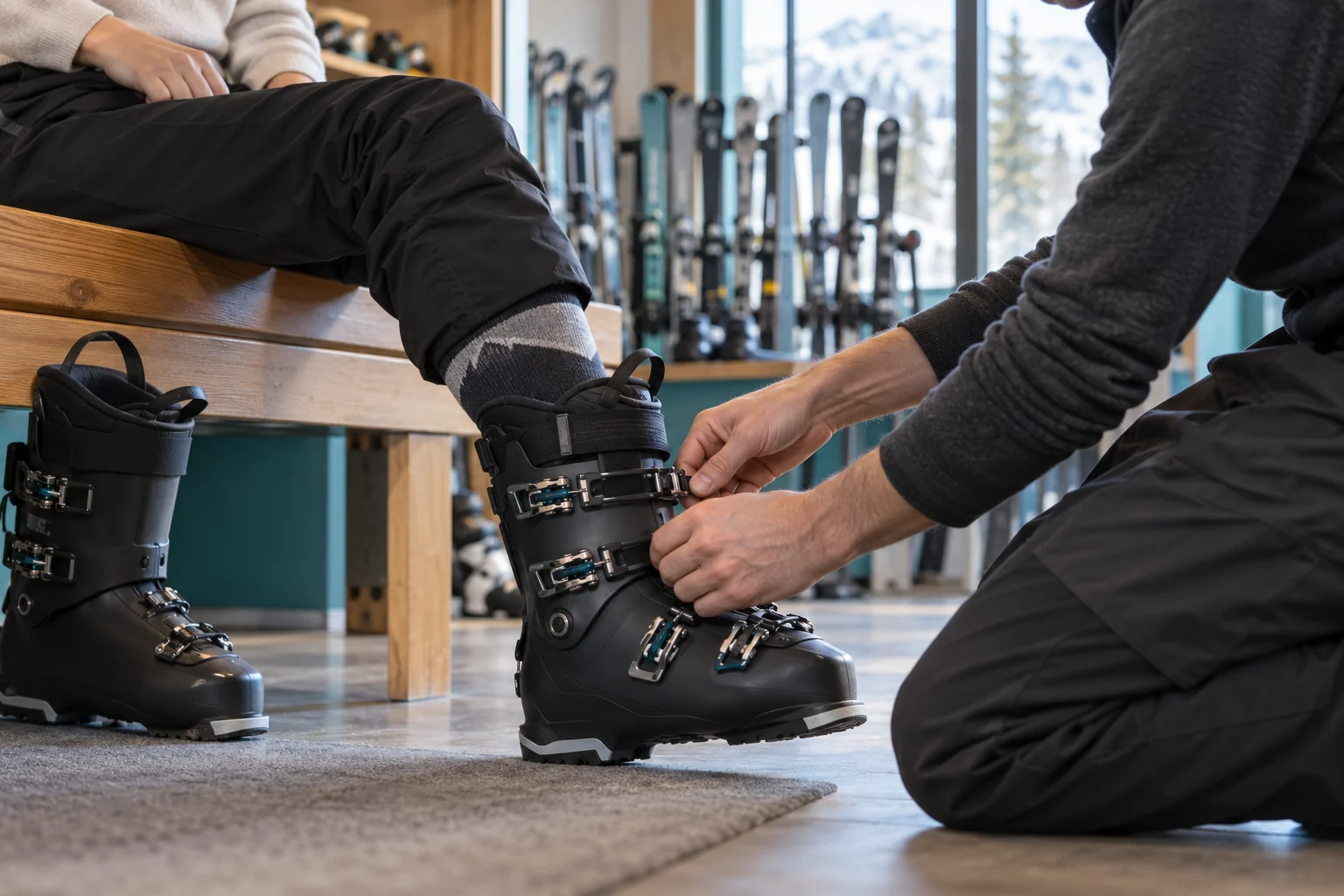
For fitting, share your height, weight, age, ability and usual shoe size. Try boots with one suitable sock; pain, numbness and strong pressure should not be endured. Explain exactly where the discomfort is rather than simply asking for a larger boot.
Ski binding setup and boot compatibility checks belong to the staff handover. A colour or photograph can guide your preference, but cannot replace checking the model, size and complete setup.
Control matters more than distance
Before skiing or riding independently, cover stopping, direction, starting safely and lift procedures with your instructor. The aim is to repeat understood actions with control, rather than reach the longest run.
The FIS code calls for speed appropriate to ability, terrain and conditions, consideration for people downhill, and checking the slope before starting. Avoid stopping in narrow places or where visibility is restricted. The resort's own rules and staff instructions also apply.
More from the primary source: FIS · code of conduct on the slopes
Finish without rushing
Confirm the return time and route back in the morning. After riding, tell the staff about boot discomfort, impacts, damage or binding concerns. That information is more useful than silently changing an item next time.
For the next day, note what worked and what you want to revisit with an instructor. You can reconsider your sport after trying it; a first trip does not commit you to buying a setup.
Keep this for your trip
Tick what is ready or copy the list to your notes. Ticks last while this page is open.
Sources behind this guide
Editorial guidance for preparing a rental trip. Technical points draw on primary sources; check resort rules and the instructions for your actual equipment before use.
The measurements behind a good fit
Height, weight, shoe size and ability are the starting point for a comfortable setup.
Read guide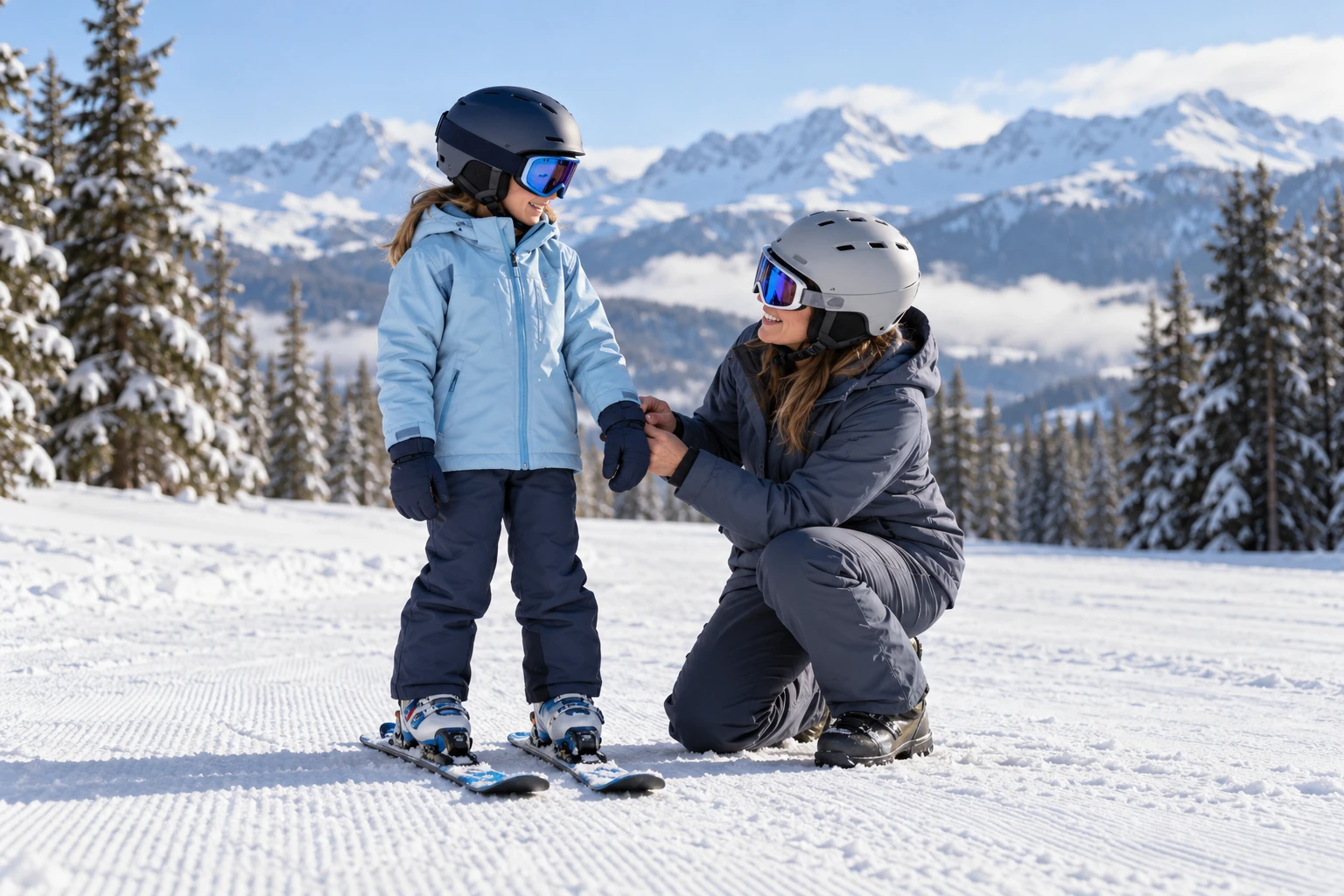
A child's first ski day, without the rush
Plan the lesson, fit a child's setup and leave room to enjoy the mountain.
Read guide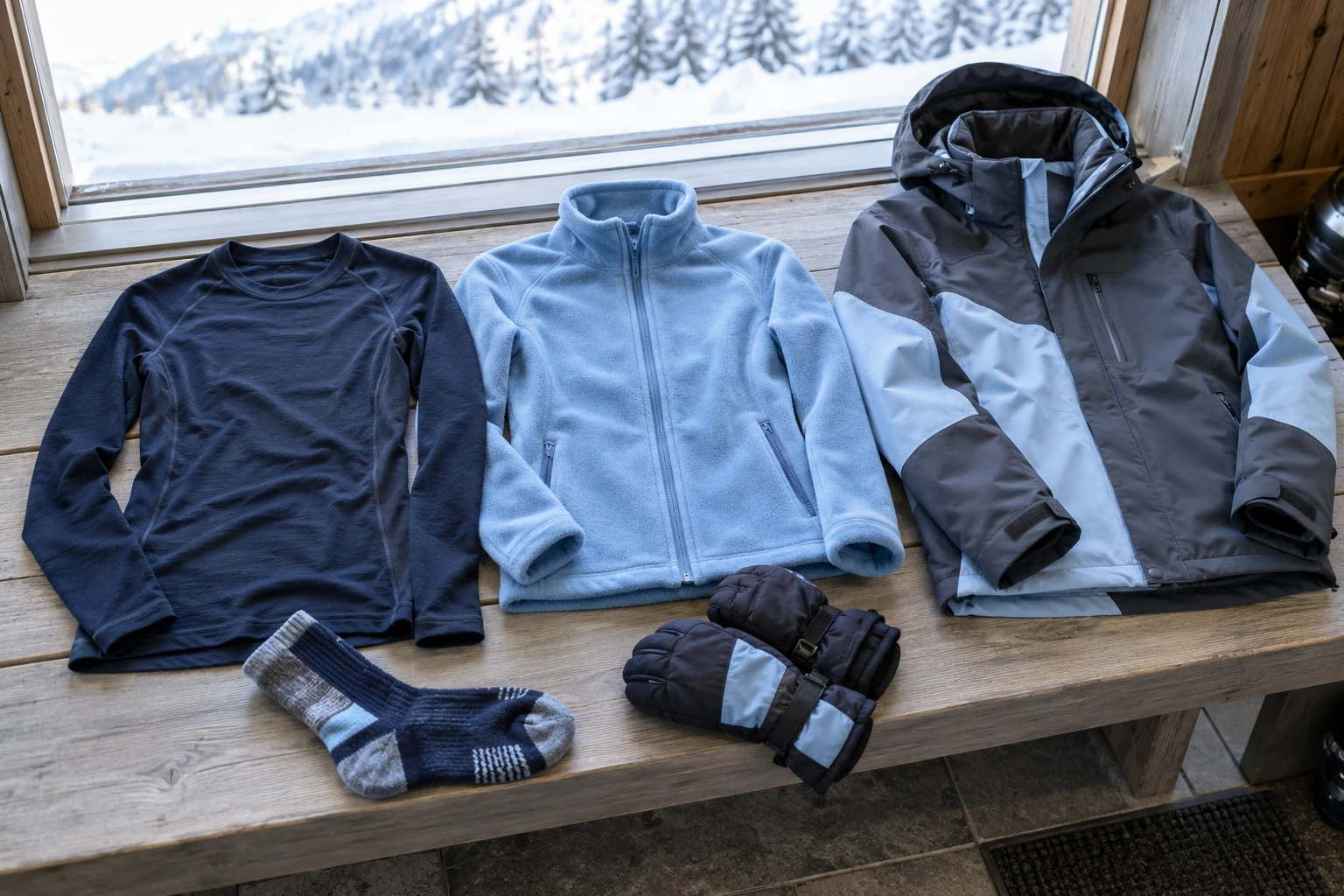
What to wear skiing: three layers, less bulk
A base layer, insulation and weather protection. Dress for activity, wind and breaks.
Read guide